

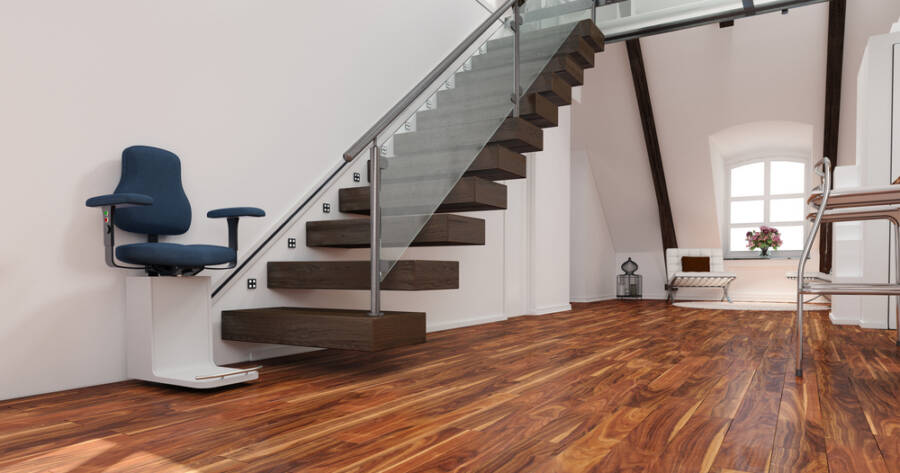
Navigating stairs can become a challenge for individuals with limited mobility, but modern solutions offer safe and practical support. Floating stair lifts provide a convenient way to move between levels without major home modifications. Understanding how they work, their features, and installation options can help homeowners choose the right solution for improved safety and independence.
Understanding Floating Stair Lifts
Floating stair lifts, often referred to as stairlifts, are essential devices designed to assist individuals with mobility challenges in navigating stairs safely. These lifts consist of a chair-like seat mounted on a track that is attached to the stairs, allowing users to move up and down without the risk of falling (source).
The primary components of a floating stair lift include a track or rail system, a motor, a seat with safety features, call/send controls, and a battery with a charger. The track guides the chair, the motor powers movement, and the seat includes features like a swivel for easy transfer (source).
Types and Installation of Floating Stair Lifts
There are various types of floating stair lifts available to accommodate different staircase designs, including straight, curved, and outdoor models (source). Straight stairlifts can be quickly installed with simple measurements, while curved stairlifts require custom manufacturing to fit specific layouts, including turns and landings. Installation time varies, with curved models typically taking longer due to their tailored design (source).
In addition to fixed systems, there are also portable stairlifts, often called stair climbers (source). These devices do not require installation and are designed to transport individuals up and down stairs with the assistance of a caregiver. They are ideal for temporary use, travel, or homes where permanent installation is not feasible, offering added flexibility for different mobility needs.
Operation and Safety Features
Operating a floating stair lift involves unfolding the chair, securing the seat belt, and using controls to activate movement. Safety features are paramount, including sensors for obstacle detection, gentle stops, safety panels, key switches to prevent unauthorized use, and emergency stops.
Regular maintenance by professionals is crucial to ensure safety and longevity, with professional installation often required to maintain warranties (source). These lifts can also transport items like groceries, enhancing convenience and safety.
Power and Maintenance Considerations
Floating stair lifts are battery-powered, requiring a nearby power source for charging. The batteries typically last about three years, and it’s crucial to keep them charged to ensure the lift is operational when needed.
For instance, Harmar stairlifts use a 24-volt battery with a cutoff feature to prevent overcharging (source). Regular maintenance is recommended to ensure optimal performance, and companies like Lifeway Mobility provide service and support for all stair lifts they install (source).
Cost-Effectiveness and Independence
Installing a stairlift is a cost-effective alternative to home remodeling for those seeking to maintain independence in a multi-level home. It provides a practical solution to mobility challenges without the extensive costs associated with creating new living spaces on the ground floor (source).
Stair lifts enhance safety by reducing the risk of falls on stairs and provide peace of mind for users and their families. They also offer independence by allowing users to access different levels of their home without assistance, making them a cost-effective alternative to assisted living facilities (source).
Why You Should Learn More About Floating Stair Lifts Today
Floating stair lifts are a vital innovation for individuals with mobility challenges, offering a safe and efficient way to navigate stairs. Understanding the different types, installation processes, and safety features can help in making an informed decision when considering a stair lift.
With the added benefits of independence and cost-effectiveness, floating stair lifts are an excellent solution for maintaining mobility and safety in multi-level homes. Exploring the various options and consulting with professionals can ensure the best fit for individual needs and preferences.